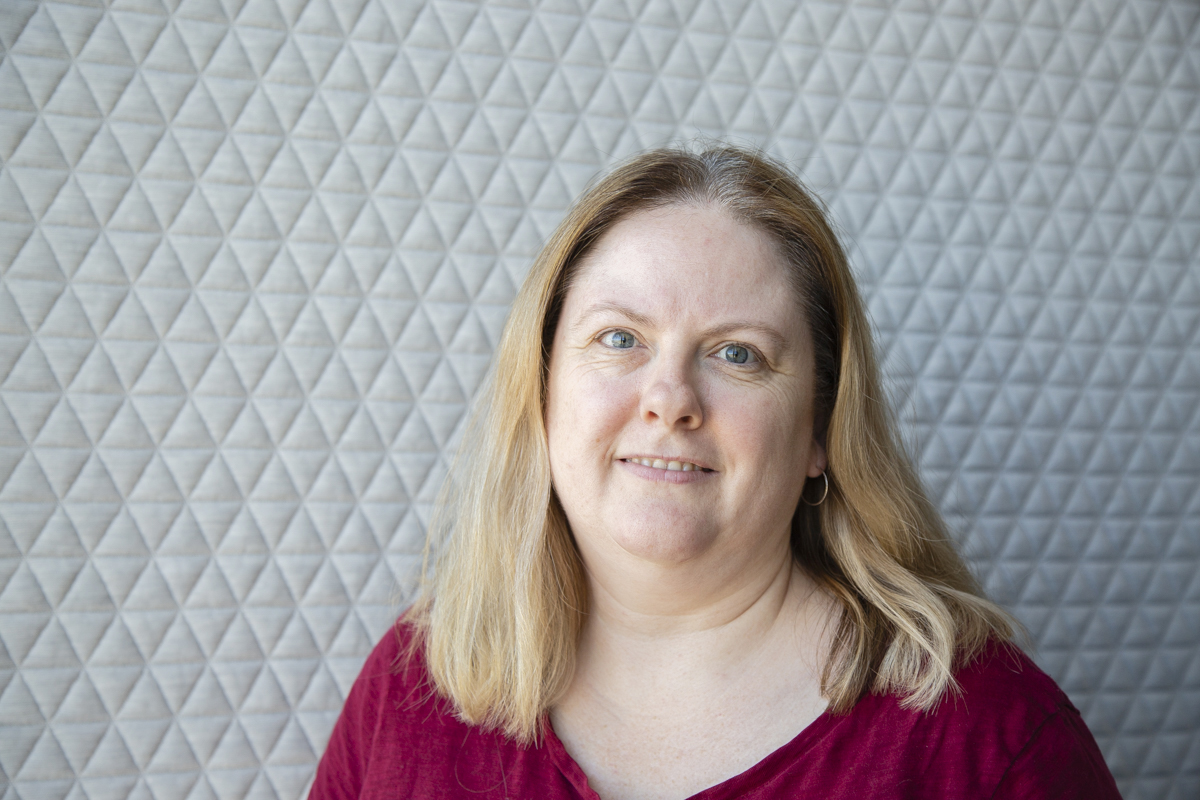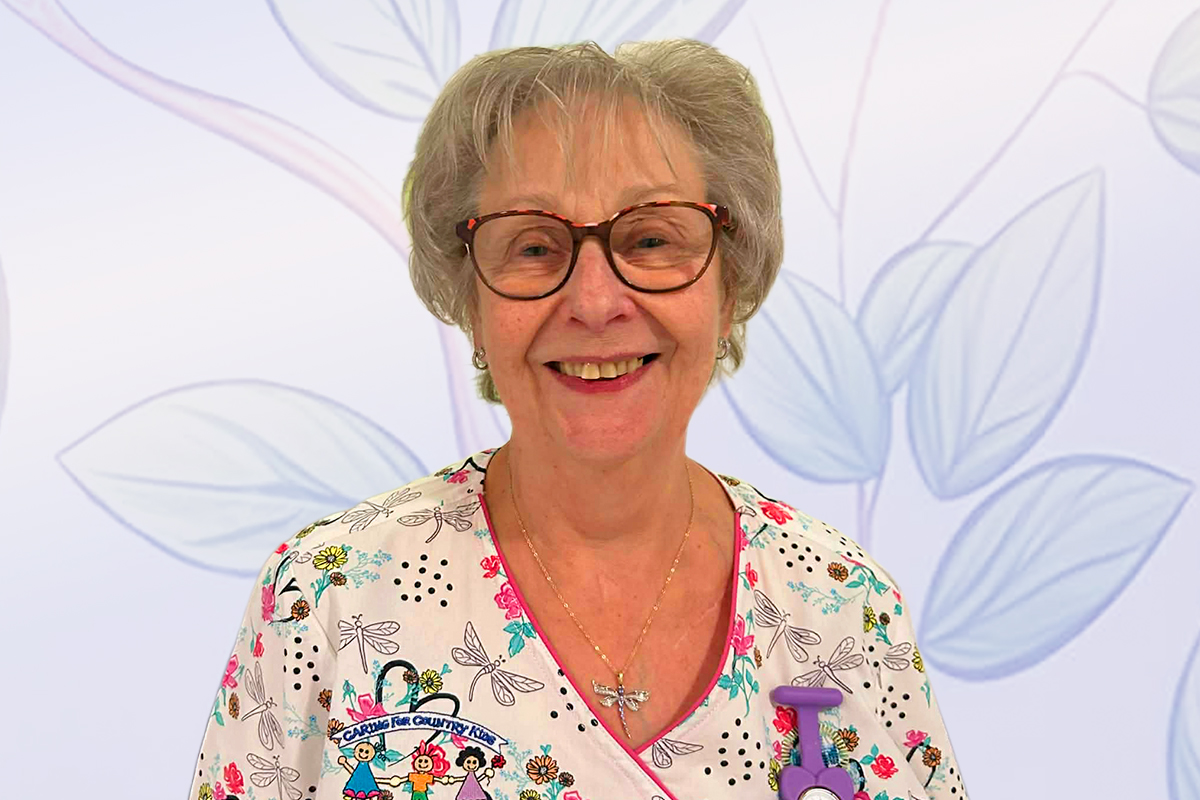
Alex Lewis. Photo: supplied
‘Matron Bullwinkel was an incredible woman. In those days you were dropped off and handed to Matron with your suitcase on the Sunday afternoon. So you were sort of put into her care and we were like her kids; she looked after us and cared for us.’
Fifty-two years ago, in January 1974, Alex Lewis was taking her first ‘daunting’ steps as an enrolled nurse. She was an 18-year-old trainee at the Fairfield Infectious Diseases Hospital, where she had been a patient herself a year earlier. Upon learning that Alex wanted to be a nurse, the nurses who were looking after her cheered her on.
‘They got Matron Bullwinkel to come round and have a chat.’
Training under Vivian Bullwinkel
Matron Bullwinkel is, of course, Vivian Bullwinkel. Having survived the Bangka Island Massacre of unarmed Australian army nurses in 1942, Bullwinkel had gone on to become the matron of Fairfield Infectious Diseases Hospital between 1947 and 1977.
Alex is deeply grateful to have been trained by Bullwinkel. ‘Matron Bullwinkel was an amazing woman and she deserves all the accolades she gets,’ she recalls. ‘And Fairfield Hospital was the most incredible place to train. It was very hands on. And because we all lived onsite in the nurse’s home, Matron would come and sit with us around the swimming pool after work and talk. She was different at work and after hours.’
Life as a nurse at Fairfield in the mid-70s wasn’t easy. Clinically, the work could be confronting. ‘For example, I nursed polio patients in iron lungs,’ Alex explains. ‘Some of those cases were really tough, really sad, but they were amazing people; they learned to do art, to paint with their mouths; they produced some beautiful paintings, and often sold them.’
‘Thank God those days are gone.’
There was also often only one nurse to 30 patients at night on the backwards. The nurses were expected to clean – ‘you had to be able to eat off everything’ – and serve patients their meals out of a bain-marie in addition to managing medications and clinical care.
‘Thank God those days are gone,’ Alex laughs. ‘But it was a good training. Matron Bullwinkel’s key lesson was about care. You have to really care for and about your patient. She also taught us how to teach the next generation coming through, how to pass our skills on; she knew that you always continue to learn, even when though you think your training’s finished. And I think I’ve carried that through my career.’
She has certainly carried it into her union membership: ‘I became an ANMF Job Rep to have a voice for our staff, to help guide the younger staff about how our union works and how we gained the things within our EBA – as this is the foundation for our conditions.’
Operation Babylift and a life in paeds
One of the highlights from this time in Alex’s early career was caring for the children of Operation Babylift. This was an April 1975 US-initiated mass evacuation of thousands of orphaned infants and children after the fall of Saigon. Many were the children of American soldiers and Vietnamese women and there was a fear they may be targeted by the Viet Cong if left in the country. A lot of the children were malnourished or unwell. Around 300 of the most acute were evacuated to Australia.
Vivian Bullwinkel flew to Vietnam with a team of nurses to help assess the acuity of the children and the care they would require in flight. She then accompanied dozens back to Fairfield. Some of the children would remain at the hospital for several months before they were well enough to make the onward journey to their adoptive families around Australia.
‘So we looked after all those kids,’ Alex recalls. ‘They didn’t all come to Fairfield, but a majority did.’
It was perhaps a precursor to what was to come. Following her time at Fairfield, Alex worked for a stint at the Eye and Ear Hospital as a scrub nurse – ‘I got to see the first bionic cochlear implant done by Professor Graeme Clark. He was so meticulous! To watch him actually do it was just such a privilege’ – before joining the paediatric ward at Northeast Health Wangaratta, where she remained for 40 years.
‘I’ve seen measles before, and once you’ve seen some of these illnesses, you don’t forget.’
Over the decades that she has been a paediatric nurse, Alex has seen many of the illnesses that were common during her time at Fairfield become either rare or effectively eliminated – only to start reappearing in recent years.
‘We had kids there that had measles encephalitis and chickenpox encephalitis. We had a dedicated whooping cough room. Most of those diseases are not around in any significant way anymore. At least, they weren’t. But now we’re starting to see them again. I’ve had kids come in at Northeast Health with an “unknown rash”. But I’ve seen measles before, and once you’ve seen some of these illnesses, you don’t forget.’
Alex has been dismayed by the increase in incidence of such vaccine-preventable diseases over recent years.
‘Immunisations have saved so many children, and people need to understand that,’ she says. ‘Without immunisation, we would still have a lot of those diseases like tetanus or chickenpox, mumps, measles – you can die from all those childhood illnesses so it’s so important to immunise because we don’t want to go back to where we were, with people either passing away or in an iron lung.’
The baby whisperer retires … sort of
The past few months have been quite emotional for Alex. In March, she received a ‘40-year award’ award from the hospital. While presenting it to her, one of her colleagues estimated that Alex has cared for more than 50,000 children. ‘She called me a baby whisperer, because no baby could get out of my swaddles!’
This followed Alex’s official retirement in February. On her last day, her colleagues decorated the whole ward with photos of her. ‘There were hundreds,’ she says. ‘I couldn’t open a cupboard or a drawer without seeing one. I was in tears. I didn’t realise how much I was valued until I left.’
Or how much she valued her colleagues, and the work – Alex realised quickly that she missed it so much that she has since started picking up casual shifts. ‘I miss the patients and their families and my colleagues; I’ve known many their entire careers, watched them grow. I really do miss that part.
‘Nursing has been my life,’ she adds. ‘It is the most amazing career you can have. It not always easy, but to care for people at their most vulnerable is such a privilege. To see people into the world and see them out? No one else gets that in their profession.’