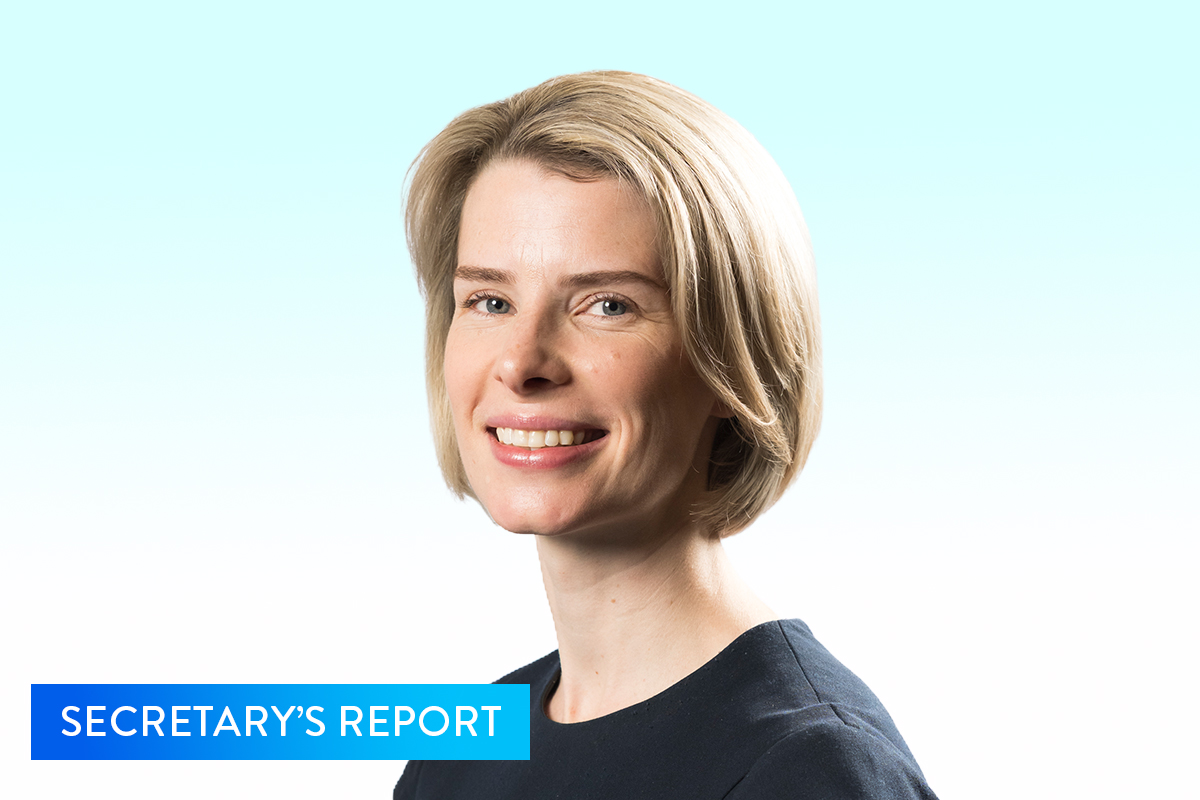
Maddy Harradence, Branch Secretary
National Health and Safety Month is happening across the country throughout October, with WorkSafe Victoria hosting a variety of free events. And while it’s always a timely reminder – and offers extra opportunities to raise our collective voices as loud as ever – workplace health and safety is an ANMF priority seven days a week, 52 weeks a year.
Because every day, every week, every month nurses, midwives and carers face occupational violence and aggression (OVA) in the workplace.
From racism, harassment, bullying and verbal abuse to physical assault, or attempted assault, OVA in health is prevalent; and in many instances, getting worse. Seventy per cent of respondents to our member survey earlier this year told us they had experienced OVA, with more than 30 per cent experiencing it at least monthly or more.
These numbers are marginally down on surveys we conducted mid-pandemic, but an increase from comparable surveys conducted a decade ago.
These numbers are not okay. They are not acceptable.
In 2014, the ANMF (Vic Branch) launched our 10-point plan to end violence and aggression. This plan used an evidence based OHS approach to tackle this insidious hazard and it proved successful when used as intended: to anticipate, mitigate and prevent OVA risks (rather than reactively, after an event has occurred).
But despite the fact that the 10-point plan was successfully embedded into both public sector enterprise agreements, it is inconsistently implemented. It was clear that more work needed to be done.
That is part of the reason why, last year, ANMF brought together a working group of members, HSRs and expert stakeholders to review and update the ANMF 10-point plan.
Later this month we’ll be launching our new, updated Safe Work Audit Tool (‘SWAT’) – the ANMF (Vic Branch) updated plan to end violence and aggression, and members are invited to join me for a free webinar on 20 November to learn more about the SWAT and how it can be applied in your workplace. This session will include:
- the evolution of the 10-point plan
- key learnings and improvements over the past 10 years
- the new audits and how they can be utilised
- a case study and group activity that brings the plan into practice
- coverage of public sector EBA requirements
- public versus private sector approaches, including how to request an OVA OHS committee
- and more.
A key thing to understand about this updated 10-point plan is included in the word ‘plan’. Preventing OVA doesn’t require magic; it requires consultation with affected employees and planning. Planning can be boring, often slow work. But it’s necessary work, and we know that when done right, it can and does help.
Part of this work, behind the scenes, happens every time you report OVA to us. I know it can seem like reporting takes too much time for too little result but if you’re not reporting all instances of OVA it makes it much harder for ANMF to help you hold your employer to account, and less likely that the situation will improve.
After any incident, therefore, members should notify their employer through formal incident reporting systems such as RiskMan. Members should also speak to their HSR about the incident and notify ANMF.
What else is ANMF doing?
ANMF has for some time now been calling for health to be made a regulated industry under the OHS Act – like the male-dominated industries of construction and mining – so that hospitals can be prosecuted for not doing enough to protect staff.
We want health-specific regulations to ensure that there is clarity for all in the sector around the obligations and expectations around prevention of OVA, particularly among all employers – not just public sector employers.
Without regulation, it is too easy for employers to blame individuals and say that there was nothing they could do, when we know this is not true: there are pro-active solutions – such as the Safe Work Audit Tool (‘SWAT’) – and employers need to implement them.
Let’s talk about it
Throughout October and into November, Assistant Secretaries Nicole Allan and Sam Casey will join me at town hall-style members’ meetings to talk about creating safer workplaces, improving pay and conditions and building our collective strength.
A town hall meeting just means you do most of the talking and we (your elected union leaders) listen. There are in-person meetings across the state, as well as several online options. I’d love to see you there, and hear your thoughts.