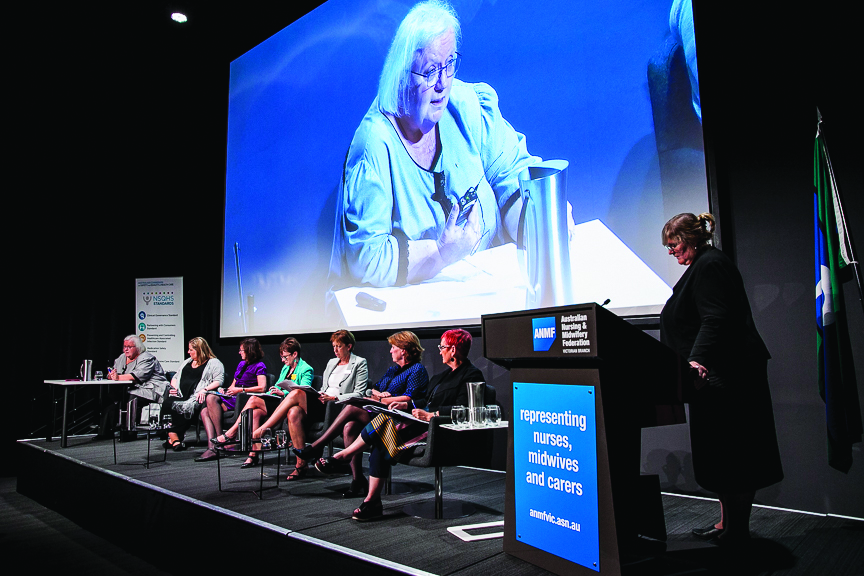
The ANMF (Vic Branch) attended the Department of Health’s Medication Management in Victoria’s Residential Aged Care Forum on 30 April to participate in further consultation about the new drugs, poisons and controlled substances legislative change for aged care in our state.
What is changing?
- The aged care amendment to the Drugs, Poisons and Controlled Substances Act 1981 (Vic) (the Act) will take effect on 1 July 2026.
- This is a legislative change that must be implemented in workplaces by the above date. Its intention is to ensure safe, quality use of medications to residents in nursing homes.
- This legislation places a new requirement on registered residential aged care providers in Victoria to ensure only nurses – both registered nurses and enrolled nurses, and other registered health practitioners – administer prescribed and dispensed Schedules 4, 8 and 9 medications to residents.
- This new requirement builds on existing Victorian legislative requirements that a registered nurse manages medication and is consistent with national Guiding Principles for Medication Management in Residential Aged Care Facilities.
- This requirement does not prevent a resident from self-administering their own medications, but to do this they will require a formal person‑centred assessment, including an assessment of the resident’s cognitive capacity.
Are there any exemptions to the change?
- The regulations attached to the Drugs, Poisons and Controlled Substances Act for the aged care amendment are not finalised as yet, but it is proposed that the only exemption is where there is an unforeseen event such as a medical emergency, a fire or a flood that unexpectedly affects the availability of all nurses on shift.
- In these very rare events, the registered nurse managing the medication administration may identify a resident/s, for example, who cannot wait until a nurse is available because they require administration of a time-sensitive medication and delegates the task for a personal care worker.
- This delegation must be consistent with the Nursing and Midwifery Board of Australia’s Decision Making Framework [PDF] and the knowledge, skill, authority and the ability of the delegatee accepting the delegation must be considered.
How is this change being regulated?
The health regulator for Victoria who oversees medicines and poisons within the state will regulate this change. They will monitor, investigate and if necessary, conduct an inspection of the residential facility. Non-compliance can result in
- required education
- issuing an improvement or enforcement notice
- issuing a prohibition notice.
Consideration of prosecution through the courts and issuing penalties are a last resort.
Complaints from consumers and workers can be made to the health regulator.
Panel discussions
A lively panel discussion followed, with organisations including the Aged Care Quality and Safety Commission, Dementia Australia and the National Ageing Research Institute.
Some of the key take aways from the panel discussion include:
- Professor Tracey Comans talked about her research with residents and carers which suggested that residents preferred to have a qualified person administering their medication and that this about managing their health conditions, not just their medications.
- This reform has also highlighted the existing issues in aged care around polypharmacy and over-prescription of medications, or the need to de-prescribe more regularly for residents as part of a quality medication review process
- This change will improve the quality use of medicines.
- It is expected that it will reduce errors, inappropriate medication use and improve continuity of care.
The following session had a number of different aged care providers describing their experiences of having already changed their work systems to nurse-only medication administering for residents. In generally positive terms they described the change for residents, personal care workers and nurses.
This anecdotal evidence is reflected in the Department of Health surveys of the sector concerning the amendment. Responses outlined that close to all public aged care providers and majority of private aged care providers (over 80%) already require nurses to administer schedule 4, 8 and 9 medications to residents.
Although nurses administering medications to residents in aged care is common practice, this legislation change will require change to care delivery for a number of aged care providers. Nurses and personal care workers working within these facilities will need ongoing education and support to effectively implement this change to their care delivery.
If there is change being implemented in your aged care workplace relating to this aged care amendment, please send through the details to ANMF via: records@anmfvic.asn.au to enable the ANMF to provide support and advice.
ANMF will continue to keep members updated as the regulations are finalised and further information is available.