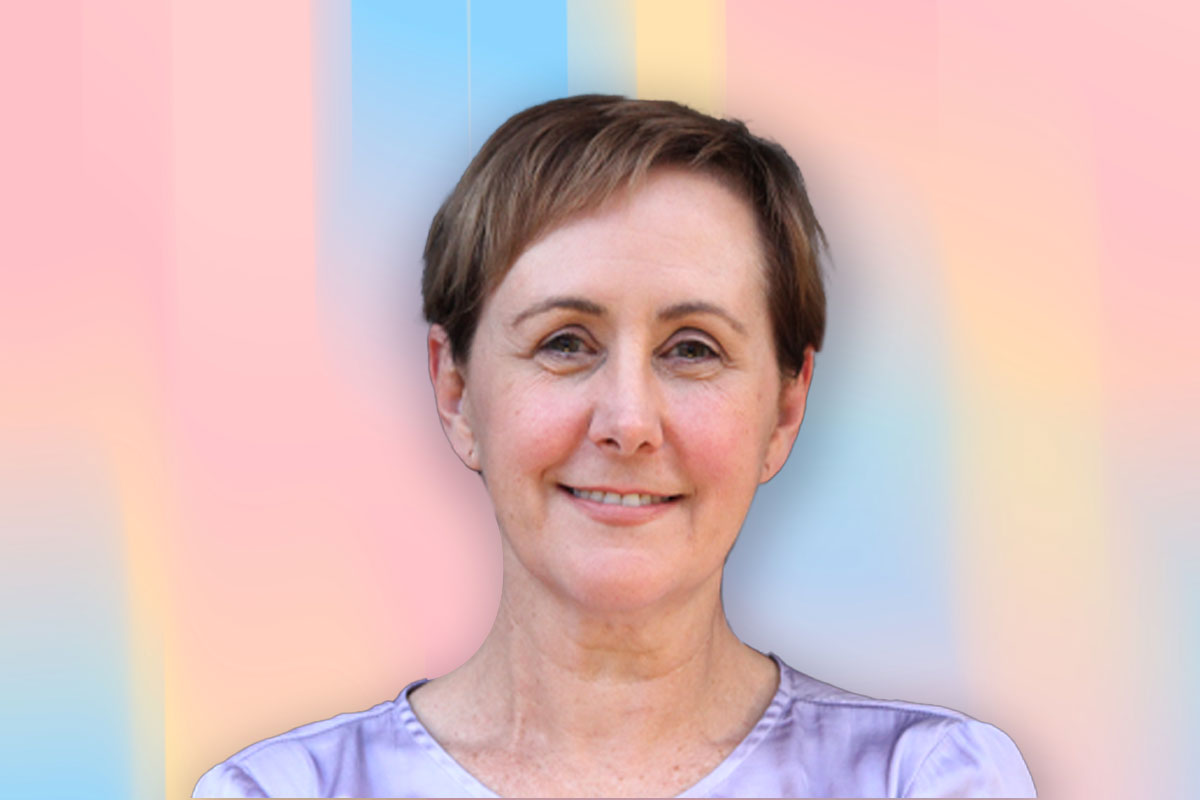
Psychologist Janelle Booker. Photo: supplied
Psychologist Janelle Booker’s professional interest in neurodiversity – particularly ADHD – began more than a decade ago when she was working at a university and seeing students who were ‘so smart and so motivated, who’d work so hard, but they just kept coming up against the same hurdles time and time again’.
Her personal interest began around the same time, as she began to realise that she too was ‘part of the neurodivergent camp’, as were members of her family, friends and colleagues. ‘This keeps life kind, interesting and fun for me!’
Janelle will be joining ANMF (Vic Branch) members at the upcoming Nurses and Midwives Wellness Conference to talk about neurodiversity, health care and you – better understanding your own mind and navigating through change.
Every brain is different
‘It’s hard to believe now,’ Janelle says, ‘but even just a few years ago no one had any interest in working with ADHD people. It was thought that they just weren’t paying attention or they just needed to try harder and stop wasting everyone’s time. It was quite brutal.’
This attitude lit a fire in her, and Janelle started to take an interest in and advocate for students with ADHD.
‘I would see them in individual therapy sessions,’ she says. ‘They’d work so hard, but at the end of the semester it’d be the same story. Not all ADHD students fail, but a majority do because of the way their brain works. It doesn’t matter how smart or how motivated they are, it’s really hard for them compared to other students.’
She began running group sessions for students with ADHD, which allowed them to see that they weren’t alone, and to share strategies. ‘It just took off,’ she says. ‘We would have a waiting list of 50, 60 students every semester; people started to choose our university because we ran that group.’
While Janelle continues to work with clients with various clinical presentations, she has become known for her particular interest in ADHD. But to be the best advocate she could be, she had to do a lot of new learning. ‘Because we did zero seconds of training in ADHD in a six-year psychology course. So while I thought I knew what ADHD was,’ she explains, ‘I quickly discovered that it’s a lot more nuanced and it’s a lot more pervasive than just having difficulties with attention.’
One of the key things she has learned is that every ADHD brain is different. ‘One of my bugbears,’ she says, ‘is when people say that ADHD presents differently in women to the way that it presents in men. That is a misunderstanding. ADHD is different in everyone.’
But what is similar for people with ADHD and other neurodiverse brains, she says, is they ‘have huge empathy for others and want to help the strugglers, the underdogs. I think it’s part of what attracts neurodivergent people to careers like nursing and midwifery. I’ve got a lot of nursing clients.’
Navigating neurodiversity as a nurse or midwife
Nurses and midwives can find themselves navigating neurodiversity on multiple, overlapping fronts:
- caring for patients, residents, consumers and women who are neurodivergent
- working with colleagues or managing staff who are neurodivergent
- living with a neurodivergent partner and/or raising neurodivergent children
- navigating personal and professional life as a neurodivergent individual.
‘It’s a complex landscape,’ Janelle notes, ‘made even more complex by the nature of shiftwork. My advice to anyone navigating one or more of these fronts is: learn as much as you can – about yourself, about neurodiversity.’
For colleagues and managers of neurodivergent workers, Janelle recommends learning, and empathy. ‘Find out more about ADHD or autism, for example, and how they present. Think about what it’s like to live in the shoes of somebody who’s trying to navigate the world with ADHD or autism. And most of all, be open and kind and supportive. You don’t have to have any of the answers; just understand that this is hard.’
Noting that neurodivergent people are often attracted to, and work well in, high-pressure environments like healthcare, Janelle adds: ‘An ADHD brain is one that’s built for complexity. If I was running a ward, and I had a staff member who had this brilliant brain for complex problem solving, I’d want to tap into that. ADHD brains can just see solutions. They don’t know how they know the solution. It just that’s how their brains work.’
Those navigating life as a neurodivergent individual likely also ‘need to learn some self-compassion skills. They likely need to learn some skills around boundaries: setting boundaries and saying no, letting go of guilt and getting clear about who they are in relation to other people.’
Nurses and Midwives Wellness Conference
Janelle is looking forward to joining members at the Nurses and Midwives Wellness conference. ‘I’ve been mission driven ever since I started to identify that there’s a group of amazing people who struggle, and who need more understanding,’ she says. ‘So when ANMF approached me, I had a strong sense that this is something that I want to contribute to.’
She adds that she once worked in a private hospital for mums and newborns. ‘And I’ve never worked with a more passionate group than nurses and midwives!’
There’s lots of different boxes of neurodiversity, Janelle notes: ADHD, autism, learning difficulties (dyslexia, dyscalculia, dysgraphia), giftedness, high sensitivity traits. ‘It’s very rare to find someone who fits neatly into one box and doesn’t have some elements of at least one of those others,’ she says.
‘So I’ll be addressing what some of those different characteristics and crossovers look like within the health setting. I could talk about this for hours, but I’ve got 30 minutes so I’m going to focus on flexibility and navigating change.’